
The AI Side-Hustle Economy: What Actually Makes Money, and What Just Sells Courses
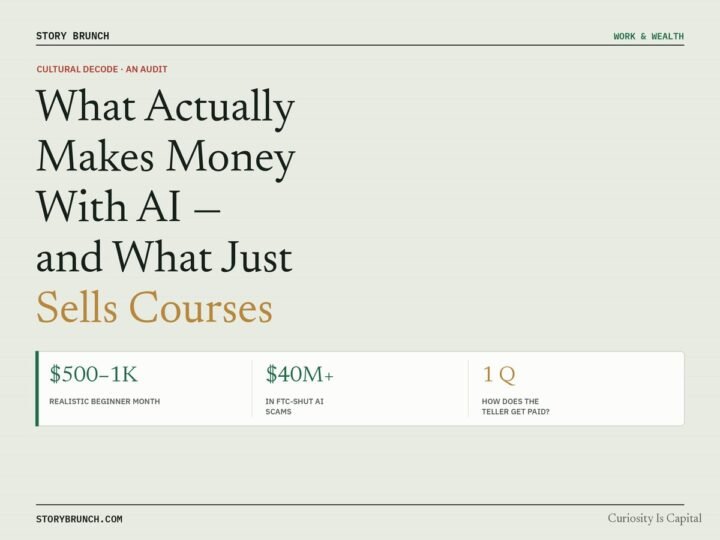
Search "AI side hustle" and every result swears it's the honest one — right before it sells you a $297 course. Underneath the funnel there's a real economy, just not the one in the thumbnails: beginners make $500–1,000 a month, not $300 a day, and the reliable money is in selling shovels, not striking gold. This is an audit, not advice — the real earnings on the record, the FTC's $40M in shut-down scams, and the one question that separates a business from a bezzle: how does the person telling you this actually get paid? Includes the Signal-or-Shovel test, so you can run it on your own search results.