Tradwife 2.0: The Aesthetic That Sells Submission as Peace

Gender & Society · Cultural Decode
Tradwife 2.0: The Aesthetic That Sells Submission as Peace
The linen is soft. The light is golden. The proposition underneath is neither. An anatomy of the internet’s most beautifully packaged argument.
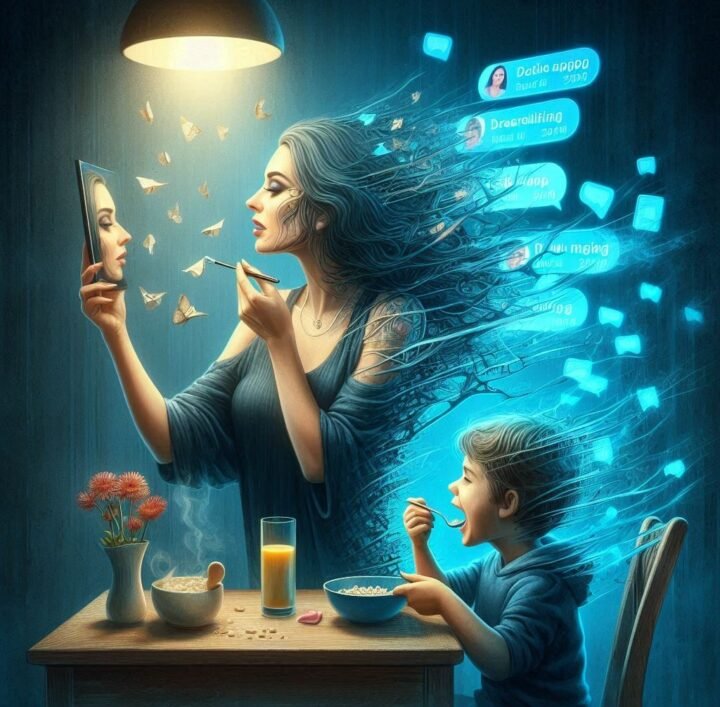
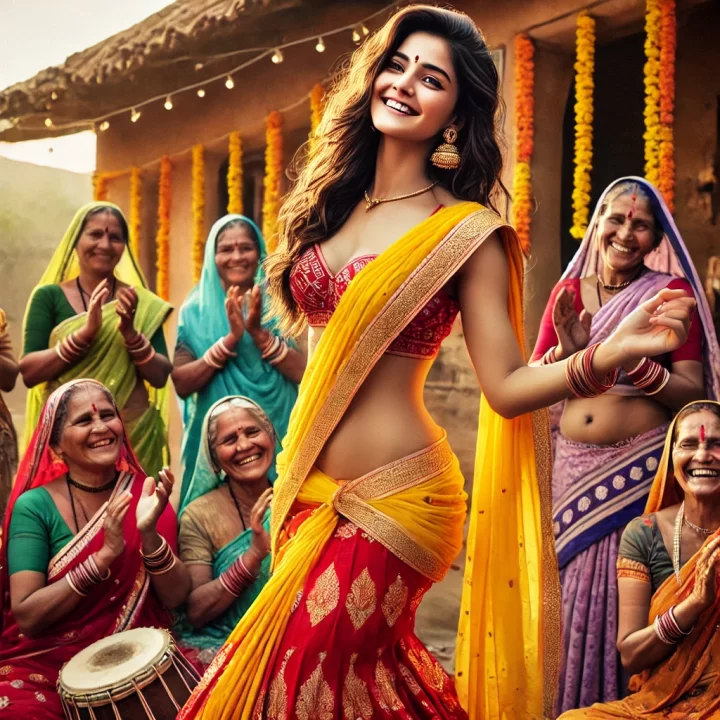
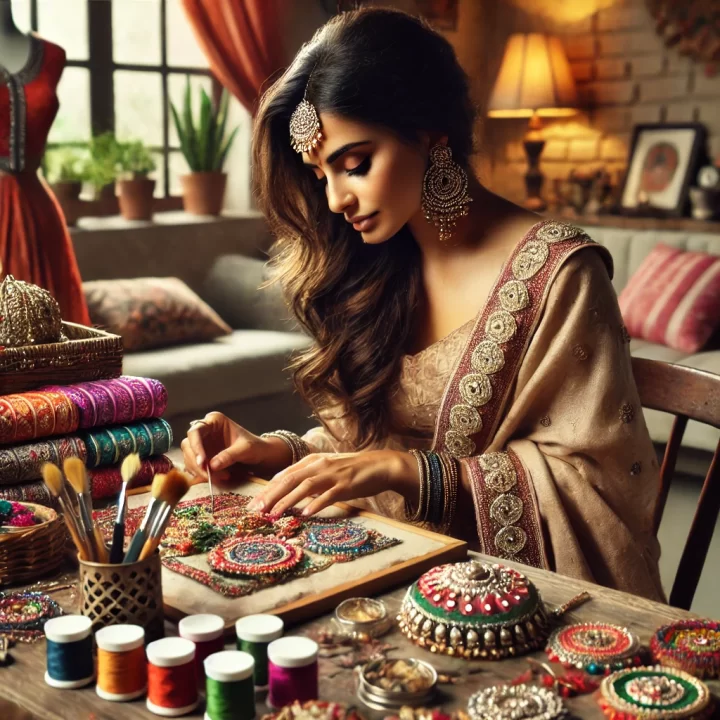
The video is sixty seconds long and nothing happens in it. A woman in a linen dress moves through a kitchen the color of butter. Her hands, dusted with flour, fold dough in real time — no jump cuts, because slowness is the point. A toddler laughs somewhere off-screen. Golden-hour light comes through a window that has never known a fingerprint. Over it all, a gentle voiceover: she used to be so anxious, she says. So burned out. Then she stopped fighting what women are for, and now, finally, she has peace.
You have seen this video. Statistically, you’ve seen dozens — the term “tradwife” was drawing up to 200,000 monthly mentions across social platforms at its 2024 peak and, per the social-intelligence firm ICUC, was still pulling around 150,000 a month into 2025 and beyond. What began as a niche hashtag has, by 2026, become an economy that Forbes credits with reshaping the home and kitchen retail industry, a New York Times bestselling novel with an Anne Hathaway film adaptation attached, and — per Wired — a literal marriage market in which matchmakers are reportedly paid $25,000 to source traditional wives for wealthy men.
That is not a mood board anymore. That is an industry. And every industry sells something. This piece is about what, exactly, is being sold in that sixty seconds of butter-colored calm — and about the machinery, old and new, that makes an ideology feel like a nap.
The short answer, before the long one
A tradwife (“traditional wife”) is a woman who embraces traditional gender roles — homemaking, domestic labor, and in the movement’s stricter versions, formal submission to a husband’s authority — and typically documents that life on social media. The term emerged in the 2010s and surged during the pandemic, when attention turned homeward.
Tradwife 2.0 is the movement’s second phase: the migration from subculture to mainstream commerce. By 2026 the trend had produced a documented influencer economy influencing kitchen and homeware retail, bestselling fiction, and premium matchmaking services — while the first peer-reviewed study of men’s attitudes toward the movement, published in Psychology of Women Quarterly, found that male support correlates most strongly with hostile sexism rather than the chivalrous, protective kind the content projects. The aesthetic sells peace; the research suggests some of its most enthusiastic buyers are purchasing something else.
Part I · The Mechanism
The aesthetic is the argument
Here is the thing nobody selling you a worldview will ever say out loud: the packaging is not decoration. The packaging is the persuasion.
Classical propaganda argues. It states a claim, and your mind — forewarned by the shape of an argument — raises its defenses. Aesthetic persuasion skips the argument entirely. It shows you a beautiful life and lets you infer the claim yourself, which is vastly more effective, because conclusions you reach “on your own” don’t trigger the resistance that someone else’s conclusions do. Psychologists have names for the individual gears. The halo effect: beauty in one dimension (the kitchen, the dress, the woman) transfers credibility to adjacent dimensions (the lifestyle, the ideology). Processing fluency: content that is easy to absorb — slow, soft, repetitive, familiar — literally feels more true, because the brain misreads ease of processing as accuracy. And the mere-exposure effect: the fortieth sourdough video requires no argument at all; familiarity has already done the arguing.
This is why researchers who study the movement keep circling the same observation: many of its most prominent creators present as apolitical, and that presentation is not the absence of a strategy — it is the strategy. A 2025 study of tradwife TikTok in the journal Gender and Education described creators constructing a romanticized traditional life and presenting it as natural and universal — a “this is simply how things are” framing that smuggles a normative claim (this is how things should be) inside a descriptive one. No claim stated, no claim to rebut. You cannot fact-check a sunbeam.
If you want to test your own defenses against this family of techniques, we built a diagnostic for exactly that: the Persuasion Immunity Test. The tradwife feed is, among other things, the most beautiful persuasion environment ever constructed. It deserves to be read as one.
Part II · The Product
“Peace” — what the fantasy actually answers
To understand why this content works, be honest about what it’s answering. The tradwife feed is not primarily selling the 1950s. It is selling the absence of something its audience has too much of.
Sociologists call it the double burden: for decades, women entered paid work in massive numbers while the domestic workload declined only modestly, leaving the average working mother running what amounts to two jobs with one body. The result is a generation of women for whom “having it all” arrived feeling like doing it all, on deadline, forever. Into that exhaustion, the tradwife video whispers the single most seductive word in the modern attention economy: less. One job instead of two. One domain, fully owned. Leisure — visible, luxuriant, on-camera leisure — which scholars of the trend note is precisely the scarce good the aesthetic performs, because reclaiming leisure is what a double-burdened viewer can least afford and most craves.
This is the concession the piece has to make, because it’s true: the diagnosis resonates for good reasons. Burnout is real. The double shift is real. The wish for a slower, softer, more embodied life is not false consciousness — it’s a reasonable response to an unreasonable arrangement. The critique of the tradwife phenomenon that pretends its audience is simply foolish will convince no one who has ever cried in a car between a job and a school pickup.
But notice the sleight of hand in the remedy. The video diagnoses an economic problem — two jobs’ worth of labor, one salary’s worth of recognition — and prescribes a hierarchical solution: exit the market, enter dependence, and rename the dependence serenity. Peace, in this framing, is not something a household negotiates. It is something a woman purchases by surrendering leverage — income, credit history, career continuity, exit options — and the price tag is cropped out of every frame. There were other available remedies (shared domestic labor, structural workplace change, the boring arithmetic of a fair marriage), but none of them photograph as well as bread.
The diagnosis is burnout. The prescription is hierarchy. The packaging is the swap.
This is the same move we anatomized in Weaponized Empathy — a genuine feeling, accurately named, then routed toward a conclusion it doesn’t actually support. The feeling is the hook; the conclusion is the catch. The tradwife aesthetic may be the largest-scale deployment of that maneuver currently running.
Part III · The Receipts
What “sells” means: following the money
“Sells” is not a metaphor. The trade press has done the accounting.
Forbes’ 2026 reporting on what it called the tradwife economy found the trend’s fingerprints across the home and kitchen industry: a boom in retro-styled and mechanical appliances, brass and porcelain finishes, heritage cookware in glass, ceramic, and solid wood — with brands developing and marketing product lines to match the aesthetic and running co-branded campaigns with tradwife creators. Market experts interviewed described consumers curating kitchens “like fashion collections.” The soft life, it turns out, has a hard SKU count.
Then there are the flagship creators themselves, whose economics invert the story on screen. The best-known figures of the movement are not, in the economic sense, housewives — they are founders. Hannah Neeleman of Ballerina Farm (over ten million TikTok followers) runs food and kitchenware businesses with her husband; reporting on the family has also noted the substantial inherited wealth behind the farm, a detail the content itself does not dwell on. Nara Smith, whose from-scratch cooking videos made her one of the most-watched creators in the genre, is a professional model. The pattern, documented across the influencer tier: women performing the exit from work, as work — often very lucrative work — while the audience is invited to admire an arrangement whose actual funding model (media revenue, family wealth, brand deals) is off-camera.
And the market has kept climbing the value chain. In April 2026, Caro Claire Burke‘s debut novel Yesteryear — about a tradwife raising five children on a Utah farm — spent weeks on the New York Times bestseller list, with Anne Hathaway attached to star in the film adaptation. Two months later, Wired reported that professional matchmakers were charging wealthy young men $25,000 to find them traditional wives — demand coming not just from red states but blue ones. Aesthetic → retail → publishing → Hollywood → matrimony-as-a-service. That is a complete commercial stack, built on sixty-second videos in which, nominally, nothing is for sale.
| Layer | What’s sold | Documented by |
|---|---|---|
| Attention | ~150,000 monthly mentions sustained into 2025–26; multi-million-follower creators | ICUC Social / platform data |
| Retail | Retro appliances, heritage cookware, co-branded influencer product lines | Forbes, 2026 |
| Media | Yesteryear (NYT bestseller); Anne Hathaway film adaptation in development | Britannica; trade press, 2026 |
| Matrimony | $25K matchmaking fees to source traditional wives for wealthy men | Wired, June 2026 |
A fair-play note: none of this makes any individual creator cynical. Building a business from your kitchen is admirable, and several of these women are formidable entrepreneurs. The analysis here is about the system — what happens when an ideology’s most persuasive advertisement is a lifestyle its own advertisers do not economically live.
Part IV · The Fine Print
The submission clause
It would be convenient for critics if the ideology had to be inferred. It doesn’t. The movement’s stricter wing states its terms on camera.
Estee Williams — one of the trend’s most-cited voices, and its most definitionally explicit — has told her followers directly that tradwives believe in submitting to and serving their husbands, framing it in her content as “biblical submission,” with reporting noting she has said she does not leave the house without her husband’s permission. Not every tradwife signs that clause; the movement spans everyone from aesthetic hobbyists to theological traditionalists, and flattening them into one figure is exactly the kind of sloppiness this site tries not to commit. But the clause exists, it is load-bearing for the movement’s ideological core, and the soft-focus packaging does not amend it — it obscures it.
Which brings us to the most uncomfortable data point in this entire story. In March 2026, Psychology of Women Quarterly published the first study of men’s attitudes toward the tradwife movement, led by developmental psychologist Rachael Robnett at UNLV with Matthew Hammond of Victoria University of Wellington. Using ambivalent sexism theory — which distinguishes hostile sexism (adversarial, resentful views of women) from benevolent sexism (the chivalrous, women-are-precious kind) — the researchers tested which flavor predicted male enthusiasm for tradwife content.
The content’s own register is unmistakably benevolent: protection, provision, cherishing. The finding was the opposite. Male support for the movement correlated most strongly with hostile sexism — the resentment-based kind — and the benevolent link was weaker. The result surprised the researchers themselves, who noted that men drawn to the movement appeared to both depend on women for intimacy and resent that dependence, and observed that this could leave tradwives in a precarious position, given how much personal and financial autonomy the arrangement asks them to yield.
Sit with the shape of that for a moment. The aesthetic advertises a market of gentle providers. The first empirical look at the demand side found the strongest signal coming from somewhere darker. If peace is the product, it is worth asking — in the most literal, consumer-protection sense — what the warranty looks like, and who underwrites it.
Interactive Diagnostic
Peace or Package? The Tradwife Aesthetic Decoder
Eight lines in the style of the genre. For each, identify what’s actually being sold: A MOOD (a feeling, honestly offered), A PRODUCT (commerce in a linen dress), or A NORM (a rule about how women should live, wearing a mood as a disguise). These are composites written for this test — the skill transfers to the real feed.
Part V · The Long View
Every era invents this woman
The last defense of the aesthetic is the word “traditional” itself — the implication that this arrangement is the human default, briefly interrupted by feminism, now being restored. History files an objection.
The ideal being sold has been manufactured, on schedule, by every media era. Eighteenth-century Anglo-American women were flooded with what historians call conduct literature — magazines, sermons, and novels prescribing wifely behavior in exhaustive detail, as Time’s coverage of the trend’s deep roots has traced. The Victorians canonized the “Angel in the House.” The 1950s built June Cleaver out of postwar economics and broadcast her in prime time. Each version presented itself not as an argument but as nature; each depended on the newest media technology of its day; and each quietly required a specific economic structure (and, historians note, a specific and exclusionary vision of which women got to embody it) to exist at all. The tradwife is not a return to tradition. She is the 2020s edition of a recurring media product — the first one with a checkout link.
And the deepest rebuttal comes from the widest lens. When you map how societies actually organize gender — as we did across fifty cultures in our interactive atlas — the “natural default” dissolves on contact: property flowing through mothers in Sumatra and Meghalaya, women hunting with bows in the Philippines, five genders in Sulawesi, and the most gender-flexible arrangements of all among foragers, who are 95% of human history. If gender roles were natural, they wouldn’t need this much marketing.
Key takeaways
- The aesthetic is the persuasion, not its wrapper. Halo effect, processing fluency, and mere exposure let the content argue for a gender hierarchy without ever stating a claim you could rebut.
- The product is “peace,” and the demand is real. The trend monetizes genuine burnout and the double burden — a true diagnosis routed to a hierarchical prescription.
- The economics invert the imagery. Flagship tradwives are media founders performing the exit from work as work, atop an industry Forbes credits with reshaping kitchen retail — now extending to bestsellers, a film deal, and $25K matchmaking.
- The fine print is stated on camera. The movement’s ideological core includes explicit submission teaching; the packaging softens it but never amends it.
- The first study of the demand side found the dark signal. Male support correlates most strongly with hostile — not chivalrous — sexism (UNLV, Psychology of Women Quarterly, 2026), the opposite of the content’s register.
- “Traditional” is the oldest ad copy there is. Conduct literature, the Angel in the House, June Cleaver, the tradwife: every media era manufactures this woman and calls her nature.
Questions this piece gets asked
What does “tradwife” mean?
A tradwife (“traditional wife”) is a woman who embraces traditional gender roles — homemaking, child-rearing, and in the movement’s stricter versions, formal submission to her husband’s authority — and typically documents the lifestyle on social media. The term arose in the 2010s and surged during the pandemic; by the mid-2020s it described both a genuine lifestyle movement and a hugely popular content genre.
Is the tradwife movement anti-feminist?
It’s contested. Critics — including academic researchers — argue the movement normalizes anti-feminist and sometimes far-right ideas by presenting a hierarchical arrangement as natural and universal. Defenders invoke choice feminism: the argument that freely choosing domesticity is itself an exercise of the options feminism won. The strongest analyses note both can be true — an individual choice can be sincere while the aggregate content ecosystem still functions as ideological persuasion.
Do tradwives earn money?
The prominent ones, substantially. Flagship creators run product businesses, brand partnerships, and media operations — Hannah Neeleman sells farm goods and kitchenware; Nara Smith works as a professional model — and Forbes has documented the broader “tradwife economy” reshaping home and kitchen retail. The lifestyle depicted as leaving the workforce is, at the influencer tier, a business model within it.
Why is the tradwife trend controversial?
Three main reasons: ideology (its core includes explicit gender-hierarchy teaching, and researchers have linked its framing to far-right normalization), economics (the lifestyle requires a single-income affluence most households don’t have, while its advertisers are often independently wealthy or highly paid creators), and the demand-side research — a 2026 study found men’s support for the movement correlates most strongly with hostile sexism, the opposite of the protective register the content projects.
Where did the tradwife trend come from?
The term emerged online in the 2010s and grew rapidly during the pandemic’s home-focused years, peaking around 200,000 monthly social mentions in 2024 and sustaining roughly 150,000 into 2025–26. Its imagery draws on 1950s Americana, cottagecore, homesteading, and religious traditionalism — but historians trace the underlying ideal much further back, through Victorian domestic ideology to 18th-century conduct literature.
Sources & further reading
- Robnett, R. D., & Hammond, M. (2026). “Ambivalent Sexism Theory as a Framework for Understanding Men’s Attitudes About the #Tradwife Movement.” Psychology of Women Quarterly.
- Forbes Vetted (2026). “The Tradwife Economy: How a Viral Creator Trend Reshaped the Home & Kitchen Industry.”
- Wired (2026). Reporting on premium matchmaking services sourcing traditional wives for wealthy men.
- Gender and Education (2025). “TikTok tradwives: femininity, reproduction, and social media.”
- Time (2026). “The Truth About the Past That ‘Tradwives’ Want to Revive” — on conduct literature and the ideal’s historical roots.
- Rottenberg, C., & Orgad, S. (2020). “Tradwives: the women looking for a simpler past but grounded in the neoliberal present.” The Conversation.
- Encyclopaedia Britannica, “Tradwife” — trend overview, creator profiles, and the Yesteryear phenomenon.
Continue Reading
Related on Story Brunch
gender and society, gender roles, influencer culture, internet trends, social media psychology, tradwife, Tradwife 2.0: The Aesthetic That Sells Submission as Peace