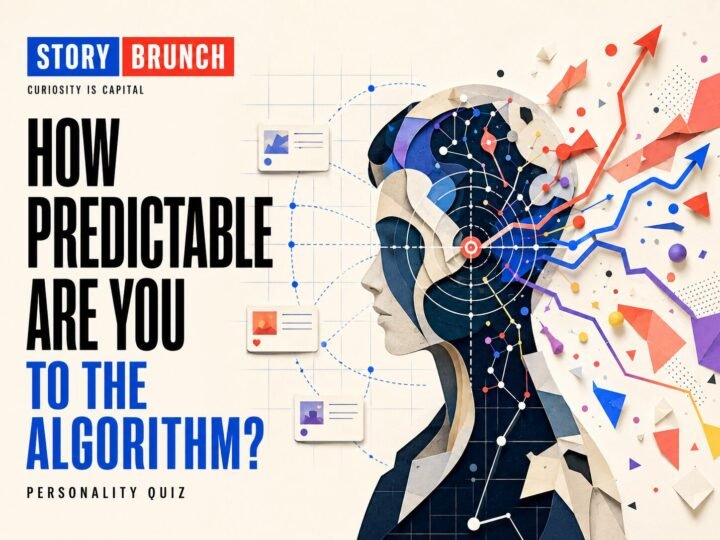
How Predictable Are You to the Algorithm? Personality Quiz

STORYBRUNCH
Personality Quiz · Algorithms & Internet Culture
How Predictable Are You to the Algorithm?
Your clicks leave clues. Twelve everyday choices reveal how confidently a recommendation system could forecast your next move.
12 situationsStreaming, scrolling, searching and sharing
Exact scorePredictability percentage plus archetype
Private by designNo sign-up and no stored answers
Quick definition
What is algorithm predictability?
Algorithm predictability is how easily a recommendation system could estimate your next click from repeated habits, visible reactions, stable interests and past choices. This quiz measures behavioural patterns for entertainment. It does not access your accounts, browser history or personal data.
STORY BRUNCH
Algorithm Lab · Test 02
Before you begin
Could the feed guess your next click?
Choose what you normally do, not what would make you look mysterious.
- 1Answer 12 ordinary digital-life situations.
- 2Get an exact predictability score and five-trait fingerprint.
- 3Share or download your private result card.
Your selections are calculated in this browser and are not submitted to STORYBRUNCH.
You open a streaming app with no plan. What gets played?
The first choice is often the loudest signal.
Your usual food or coffee order is available. What happens?
Your feed becomes eerily accurate for three days. Your response?
How do you usually discover music you end up loving?
When you genuinely enjoy something online, what do you usually do?
Late at night, what does your online behaviour look like?
A new interest suddenly takes over your attention. How visible is it?
A friend sends something far outside your usual taste. What happens?
How many versions of you exist across the internet?
The platform recommends something completely wrong. What do you do?
On a free weekend morning, which digital move comes first?
If an algorithm had to bet on your next click, where should it place the money?
58%
How confidently the feed could bet on your next move.
Your result
You are 58% predictable
The Human Forecast
Routine strengthBalanced
Taste rangeBalanced
Signal visibilityBalanced
Identity consistencyBalanced
Pattern-breakingBalanced
Original scoring model
How the Algorithm Predictability Quiz works
Every answer contributes a direct predictability signal and five behavioural dimensions. The final percentage combines both layers across all 12 questions. No single answer determines your result, and the score is not a judgment: predictability can create convenience, while unpredictability can create discovery.
How consistently you repeat times, platforms, creators and familiar choices.
How widely you move across topics, genres, communities and sources.
How clearly likes, follows, saves, comments and corrections reveal your preferences.
How similar your interests and online persona remain across contexts and platforms.
How often you leave recommendations, choose outside your history or deliberately disrupt a routine.
Result guide
What your algorithm predictability score means
Low scores indicate more varied or hidden signals. High scores indicate more stable and visible patterns. Neither is automatically better.
The Beautiful Glitch
Your choices resist a clean model. You explore widely, shift context and leave incomplete clues.
The Wildcard
You have recognisable islands of taste, but the jumps between them keep the forecast unstable.
The Selective Surprise
You maintain useful habits while regularly leaving the path that recommendation systems expect.
The Human Forecast
Your next category is often guessable, but your exact choice still contains a human plot twist.
The Familiar Signal
Your stable interests and readable reactions help platforms learn you quickly and serve familiar wins.
The Algorithm’s Open Book
Your digital patterns are unusually clear. Recommendations become convenient, accurate and occasionally narrow.
Frequently asked questions
Algorithm Predictability Quiz FAQs
What does it mean to be predictable to an algorithm?
It means your repeated behaviour and visible feedback create patterns that a recommendation system could use to estimate what you may click, watch, buy or ignore next.
Does this quiz access my browser history or social accounts?
No. It uses only the answers you select. Scoring happens locally in your browser, and this quiz does not request account access or save your selections.
Is a high or low predictability score better?
Neither. Higher predictability can produce efficient and relevant recommendations. Lower predictability can increase novelty and reduce repetition. Both patterns have benefits and blind spots.
How is the exact percentage calculated?
The quiz combines a direct signal from every answer with averages for routine, taste range, visible feedback, identity consistency and pattern-breaking. All 12 answers contribute to the final score.
Can I make my recommendations less repetitive?
Yes. Search beyond the feed, follow a wider range of sources, use chronological or saved lists, and deliberately explore topics outside your usual categories.
Can an algorithm really understand my personality?
It can model behaviour and estimate probabilities, but that is not the same as understanding your motives, values or full personality. This quiz is an entertainment tool, not a technical audit.
i
Editorial note: This original STORYBRUNCH quiz is intended for entertainment and cultural self-reflection. Real recommendation systems use different datasets and objectives, and their predictions change across platforms and over time.