Parasocial: How One-Sided Love Became the Internet’s Default Relationship

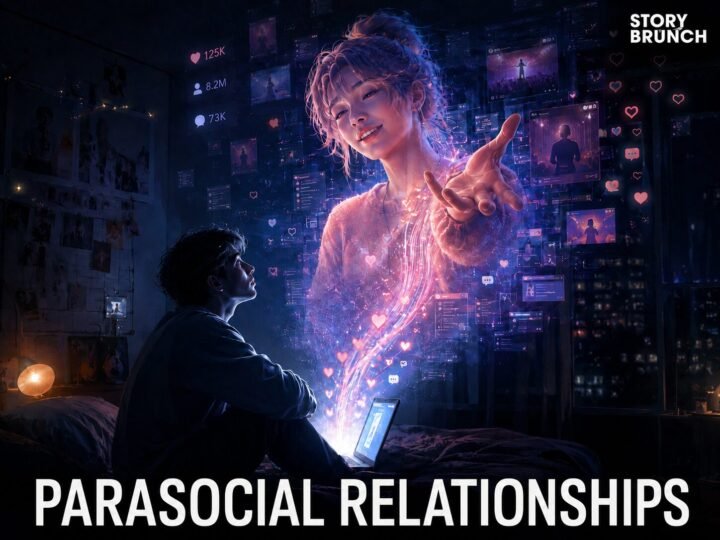
Parasocial How One-Sided Love Became the Internet’s Default Relationship
You know their bedroom, breakfast order, heartbreak and private jokes. They do not know your name. The feeling can still be real — and the business built around it is getting very good at turning distance into intimacy.
There is a person in your phone who has never met you and somehow occupies the emotional category of a friend. You know the rhythm of their speech. You can predict what will make them laugh. You notice when they seem tired before they say they are tired. When they disappear for a week, the day feels fractionally emptier. When they are attacked online, your body produces the hot, defensive loyalty usually reserved for someone in your group chat.
You may call this fandom, comfort viewing, a celebrity crush, a podcast friendship, a streamer community or simply “someone I follow.” The internet increasingly calls it parasocial. The word is now thrown at everything from pop-star obsession to political loyalty, often as a sneer meaning you care too much about a stranger. That is both narrower and less interesting than the original idea.
Parasociality is not a synonym for delusion. It is a description of relationship structure: one person knows a great deal about another; the second person knows little or nothing about the first. The attachment can be warm, useful, motivating, funny and socially connective. It can also become substitutive, entitled or financially extractive. The decisive question is not whether the feeling is “fake.” The feeling is usually real. The question is what the relationship can return.
What is a parasocial relationship?
A parasocial relationship is an enduring, one-sided socio-emotional bond with a media figure — such as a celebrity, influencer, streamer, podcaster, athlete, politician, fictional character or virtual persona. It grows through repeated exposure, direct address, familiarity and the feeling of access, even though mutual knowledge and reciprocity are limited or absent.
The term grew from Donald Horton and R. Richard Wohl’s 1956 study of radio and television personalities. Their central insight still holds: media can stage the appearance of face-to-face intimacy at enormous scale. Social media did not invent the bond. It made the bond continuous, interactive-looking, measurable and purchasable.
The theory arrived before the influencer
In 1956, television was still new enough to look psychologically strange. Horton and Wohl studied the people who seemed to step through the screen and sit inside the viewer’s social world.
“Intimacy at a Distance”
Donald Horton and R. Richard Wohl observed that radio, film and especially television created an illusion of face-to-face relationship. Hosts looked into the camera, addressed the viewer directly, anticipated a response and behaved as though an intimate conversation were taking place. They called the media figure a persona and the staged conversational exchange para-social interaction.
The crucial limit was reciprocity. The audience could select among offered relationships or withdraw, but it could not shape the relationship as an equal partner. The exchange was one-sided, controlled by the performer and unable to develop mutually in the ordinary way.
Horton & Wohl, Psychiatry, Vol. 19, 1956.The paper is startlingly modern because it understood that media intimacy was not produced by content alone. It was produced by social choreography: eye contact, predictable personality, recurring appointments, private-sounding disclosure, a supporting cast, an audience role and the sense that the performer had anticipated your exact reaction.
The “Lonesome Gal” was a proto-influencer
One example in the paper feels less like broadcasting history than a product prototype. The Lonesome Gal was a brief radio programme popular in the early 1950s. A soft-voiced female persona addressed solitary male listeners as though she were speaking to one exhausted lover in a private room. She reassured him that he was understood, needed and not alone. The programme spread to scores of cities and reportedly received thousands of marriage proposals.
The technology was radio. The product was personal recognition without reciprocal exposure. No awkward first meeting. No risk that the other person would become bored, disagree, need care in return or reveal an inconvenient self. The listener was emotionally addressed but socially untested.
The Lonesome Gal demonstrates that a mass voice can feel privately addressed.
Horton and Wohl describe the persona, direct address and one-sided “conversational give and take.”
Communication researchers develop scales and distinguish attachment, identification and repeated parasocial experience.
Blogs, YouTube, podcasts, social feeds and livestreaming turn scheduled familiarity into daily ambient companionship.
Memberships, paid messages, gifts, subscriber tiers and personalised content convert intimacy signals into recurring revenue.
Historical precision: Horton and Wohl used both “para-social relationship” and “para-social interaction.” Later scholarship sharpened the distinction between the momentary experience during media use and the enduring bond that persists between encounters.
Not every fan is “parasocial” in the same way
Online conversation treats parasocial as a moral diagnosis. Research treats it as a family of experiences. The distinctions matter because enjoying a podcast host, participating in a fandom and believing a celebrity owes you access are not the same psychological event.
| Term | What it describes | Simple example | Reciprocity |
|---|---|---|---|
| Parasocial interaction | A temporary feeling of mutual awareness while consuming media. | A host looks into the camera and you instinctively answer. | Simulated in the moment |
| Parasocial relationship | An enduring bond that exists between episodes, posts or appearances. | You miss a podcaster during a hiatus and feel happy at their return. | Structurally one-sided |
| Identification | Temporarily experiencing the story from the figure’s perspective or imagining being them. | You see yourself in a fictional hero’s choices. | Not a relationship by itself |
| Fandom | A social identity and community organised around a person, team or story. | Fans make art, jokes, meet-ups and friendships with one another. | Often reciprocal among fans |
| Entitlement | The belief that attention, disclosure, agreement or access is owed. | “I supported you, so you must explain your breakup.” | Demand for false reciprocity |
| Obsession or stalking | Persistent intrusive behaviour, surveillance or boundary violation. | Tracking locations or contacting family after being asked to stop. | Coercive, not merely parasocial |
Television created the illusion. Platforms removed the closing credits.
The old persona visited at 8 p.m. The internet persona wakes you, eats with you, works beside you, confesses at midnight and returns as soon as your thumb asks.
Frequency becomes ambient
Daily stories, shorts, podcasts and notifications make the persona part of routine rather than a special programme.
Disclosure becomes serialized
Childhood wounds, dating updates, health scares and “unfiltered” mornings arrive in instalments, producing the feeling of shared history.
Address becomes singular
“You,” eye contact, whisper formats and direct-to-camera speech make a mass audience feel individually selected.
Response becomes possible-looking
Likes, replies, polls and chat create genuine interaction for a few and the visible possibility of interaction for everyone else.
Community supplies evidence
Inside jokes, fandom names, emotes and recurring rituals make the relationship socially confirmed by other viewers.
Recognition becomes tiered
Badges, paid messages, private feeds and custom content attach price points to being seen more clearly.
Build an Intimacy Machine
Turn on the platform features. Watch ordinary media exposure acquire the texture of a relationship.
None of these features is inherently deceptive. A creator can disclose sincerely. A reply can be genuinely kind. A membership can fairly support independent work. The structural effect comes from their combination: one human being performs relational availability for a crowd, while software distributes each signal as though it arrived personally.
What if content is only the wrapper?
The attention economy sells your gaze. The loneliness economy goes one layer deeper: it sells relief from disconnection, often by packaging recognition, routine, belonging and low-risk intimacy as platform features.
This is not a single industry and it is not a conspiracy. It is a business logic visible across livestreaming, subscription communities, creator memberships, personalised video, social gaming, dating products, wellness apps and conversational companions. The recurring commercial question is the same: how can a fleeting feeling of being seen become a habit, and how can the habit become recurring revenue?
The economic power lies in scalable scarcity. A creator’s attention is scarce; the platform can slice that scarcity into products. A free viewer receives general warmth. A subscriber receives a badge. A donor may hear their name. A higher tier enters a private chat. The ladder does not merely sell more content. It sells increments of perceived social distance.
Researchers reviewing social-media monetization have documented the rapid spread of paid memberships and virtual gifting. The important cultural shift is not simply that audiences pay creators. Patronage is ancient. The shift is that platforms increasingly make relational signals — visibility, acknowledgment, proximity and access — part of the transaction interface.
The loneliness angle gives the analysis teeth, but it needs discipline. Loneliness does not automatically cause parasocial attachment, and parasocial attachment does not automatically cause loneliness. Evidence on social media and well-being is mixed and context-dependent. Some people use mediated bonds as a supplement; others as a bridge; others as an avoidance strategy. The business model, however, has a clear incentive: connection that fully satisfies and sends you away is less profitable than connection that comforts you just enough to return.
Parasocial does not mean pathetic
Humans have always bonded with absent people, imagined figures, saints, heroes, authors, performers and voices in the dark. The capacity is ordinary. What matters is what the bond helps us do — and what it quietly replaces.
What these bonds can genuinely provide
Parasocial relationships can offer comfort during stress, models for identity, inspiration, practical learning, continuity during life transitions and a sense of companionship. They can help a person rehearse possibilities: how to speak, dress, create, recover, parent, come out, lead, joke or survive. For someone whose immediate environment lacks understanding, a distant figure may supply language for a self that has not yet found local recognition.
They also generate social relationships sideways. Viewers meet one another, form group chats, attend events, exchange help and build communities that outlive the content that introduced them. The central bond may be one-sided; the network around it need not be.
Supplement
The bond adds pleasure, meaning or motivation to a life that still contains reciprocal ties.
- You enjoy the persona without expecting access.
- Interest supports hobbies and friendships.
- Spending is deliberate and affordable.
Substitute
The bond begins doing work that local relationships, community or self-development are not doing.
- You choose the feed whenever real contact feels effortful.
- The persona regulates most difficult moods.
- Absence produces disproportionate distress.
Extraction
The relationship is organized around escalating access, obligation or emotional spending.
- Money feels necessary to remain visible.
- Support turns into ownership.
- Boundaries feel like betrayal.
The red flag is not intensity. It is displacement.
You can care intensely about a singer, athlete, fictional character or creator without losing perspective. A useful audit asks whether the bond expands life or narrows it. Does it lead to art, knowledge, community, courage and reciprocal friendship? Or does it increasingly consume time, money and emotional bandwidth while making ordinary people seem disappointing because they cannot be edited, predicted or paused?
Real relationships carry friction: misunderstanding, negotiation, inconvenience, boredom, repair and the moral demand to recognize another full person. Parasocial bonds are attractive partly because they can deliver emotional stimulation with very little of that burden. The risk is not that the viewer mistakes pixels for flesh. It is that low-friction intimacy resets the tolerance for human friction.
One person, known by thousands who each feel singular
Parasocial analysis often pathologizes the audience and ignores the labour of the persona. But asymmetry cuts both ways. The viewer feels personally familiar with someone who does not know them. The creator is personally known by a crowd whose members they cannot possibly hold as individuals.
The viewer’s experience
“I have spent 400 hours with you. I know your family stories, fears and habits. You are woven into my daily life. Our connection feels cumulative.”
The creator’s experience
“I see usernames, metrics and flashes of individual lives. I may care about the audience deeply. I still cannot know each person at the depth they know me.”
The creator must perform consistency without becoming mechanical, vulnerability without losing privacy, gratitude without promising friendship and availability without surrendering a life. Their income may depend on creating the emotional atmosphere of closeness while enforcing boundaries that puncture it.
This creates a brutal mismatch of ledgers. A follower may privately count years of attention, purchases, defence and emotional investment. The creator sees one account among many. When the creator changes politics, partner, style, schedule or boundaries, the follower may experience not ordinary disappointment but relational betrayal: “After everything we have been through.” The creator may experience the reaction as an invasion by a stranger.
Both perceptions make sense from inside their information environments. The harm begins when the language of community conceals the limits of the relationship. “We are family” may be warm rhetoric. It is also a dangerous contract if only one side is expected to remember birthdays, offer private care and remain loyal through change.
The default relationship now shapes politics, consumption and identity
Once trust is routed through familiarity, the person who feels known can become more persuasive than the institution that merely presents evidence.
Influence arrives wearing friendship
Traditional advertising announces itself as persuasion. Influencer persuasion often arrives inside a relationship ritual: the morning routine, the vulnerable confession, the “you asked me” recommendation, the unscripted livestream. The product enters through a channel already coded as personal trust. This does not mean every recommendation is dishonest. It means the emotional infrastructure doing the persuasive work was built long before the sales link appeared.
Politics becomes personality maintenance
Political figures increasingly operate as daily media personae. Followers learn their verbal tics, family narratives, enemies and emotional weather. Support can become less like agreement with a programme and more like defence of a familiar protagonist. Criticism then feels not merely ideological but relational. The leader is not only right; the leader is ours.
India shows how parasociality becomes collective
In India, film, cricket, politics, devotional media and the vernacular creator boom make the phenomenon especially visible. A star can be encountered simultaneously as entertainer, moral example, regional symbol, family-like figure and commercial endorser. Fan clubs and digital communities can convert one-sided affection into reciprocal collective action: charity, celebration, defence, harassment, voting cues or consumer mobilisation.
The cultural lesson is important: parasociality is not simply an isolated individual staring at a screen. It can be socially organized attachment. The one-sided bond supplies a shared object; the community supplies identity, status and enforcement.
And then there are AI companions
Conversational AI complicates the vocabulary. A chatbot may respond, remember and adapt, so it is not classically parasocial in the Horton-and-Wohl sense. Yet the relationship may still be radically asymmetric: the system simulates attention without possessing a human life, vulnerability or reciprocal stake. It is better understood as a neighbouring form — synthetic reciprocity — where the response is real as an event but engineered as a service.
The direction of travel is clear. Media once asked viewers to imagine that a distant person was speaking to them. Platforms made occasional recognition possible. AI can now generate continuous individualized response. The old “intimacy at a distance” is becoming intimacy without a distant human at all.
Is the bond enriching you — or enclosing you?
This is not a clinical test. It is a practical check on substitution, entitlement and spending. Choose the answer that best describes your relationship with one creator, celebrity, public figure or fictional universe.
The Parasocial Balance Check
Six questions · private in your browser · no data is collected
1. When this figure is absent, how much does your day change?
2. Does following them lead you toward other people and activities?
3. How do you react when they set a boundary or keep something private?
4. What best describes your spending?
5. Can you tolerate serious disagreement with them?
6. Compared with reciprocal relationships, this bond feels…
A high score does not prove a disorder, nor does a low score make every platform practice healthy. It simply identifies where a one-sided bond may be carrying more emotional weight than it can safely return.
Six rules for healthy parasocial attachment
The goal is not emotional austerity. You do not need to stop caring. You need to keep the architecture visible.
Name the structure
Say: “I know a curated public version of this person. They do not know me.” The sentence protects affection from entitlement.
Translate inspiration into action
Let the bond send you outward: learn the skill, join the club, call the friend, make the work, attend the local event.
Budget recognition
Treat gifts and memberships as entertainment or patronage, not proof of closeness. Decide the amount before emotion peaks.
Protect disagreement
A healthy bond can survive complexity. You do not need to defend every choice to preserve what their work meant to you.
Build reciprocal redundancy
No single person — online or offline — should carry your whole sense of being understood. Create several places to belong.
Notice displacement
Track what gets crowded out: sleep, money, study, work, local friendship, dating, exercise, family or privacy.
Creators can help by refusing false promises: describing paid tiers clearly, avoiding “family” language when the relationship is transactional, setting consistent boundaries and building community pathways that connect audience members to one another rather than only upward toward the persona.
Platforms could also design for social health rather than endless proximity: clearer spending controls, friction before repeated gifts, transparent labels for mass or automated messages, better harassment tools and more features that help communities form horizontal ties.
Questions people ask about parasocial relationships
Who coined the term parasocial relationship?
Donald Horton and R. Richard Wohl introduced the concepts of para-social relationship and para-social interaction in their 1956 paper “Mass Communication and Para-Social Interaction: Observations on Intimacy at a Distance.” They were studying the apparent face-to-face intimacy created by radio, film and television personalities.
What is the difference between parasocial interaction and parasocial relationship?
Parasocial interaction is the momentary experience of apparent mutual engagement during media use — for example, feeling that a host is speaking directly to you. A parasocial relationship is the enduring bond that continues between encounters. Modern research keeps these concepts separate because one is an episode and the other is an ongoing attachment.
Are parasocial relationships unhealthy?
Not inherently. They can provide comfort, identity exploration, inspiration, learning and entry into real communities. They become concerning when they displace reciprocal relationships, drive unaffordable spending, produce entitlement to access or create serious distress and impairment.
Why are influencers so good at creating parasocial bonds?
Influencers combine frequent exposure, direct eye contact, informal speech, personal disclosure, visible audience replies, recurring rituals and everyday settings. These cues resemble friendship while remaining scalable. Social platforms then keep the relationship continuously available through notifications and feeds.
Do parasocial relationships reduce loneliness?
They can provide short-term comfort and a perceived source of support, but they are not a simple cure. Research suggests effects depend on the person, the bond and whether it supplements or substitutes for reciprocal connection. Social-media use overall has only a complex and often weak relationship with loneliness, so confident one-cause explanations should be avoided.
What is the loneliness economy?
The loneliness economy is a useful analytical term for products and platforms that monetize unmet needs for companionship, belonging, recognition or low-risk intimacy. In creator culture, it appears when access, acknowledgment and proximity are turned into memberships, gifts, private tiers or personalised responses.
Can a relationship with an AI companion be parasocial?
It overlaps with parasociality but is not identical. Classic parasocial relationships involve a media persona who does not reciprocally know the audience member. An AI system can produce individualized responses, creating what this article calls synthetic reciprocity: responsive interaction without a mutually vulnerable human partner.
Sources & further reading
- Horton, D. & Wohl, R. R. (1956). “Mass Communication and Para-Social Interaction: Observations on Intimacy at a Distance.” Psychiatry, 19, 215–229. A readable reproduction is also available through Particip@tions.
- Dibble, J. L., Hartmann, T. & Rosaen, S. F. (2016). “Parasocial Interaction and Parasocial Relationship: Conceptual Clarification and a Critical Assessment of Measures.” Human Communication Research, 42(1), 21–44.
- Hoffner, C. A. & Bond, B. J. (2022). “Parasocial Relationships, Social Media, & Well-Being.” Current Opinion in Psychology, 45, 101306.
- Lotun, S., Lamarche, V. M., Matran-Fernandez, A. & Sandstrom, G. M. (2024). “People perceive parasocial relationships to be effective at fulfilling emotional needs.” Scientific Reports, 14, 8185.
- Volkmer, S. A. & Meißner, M. (2024). “Beyond livestreaming: The rise of social media gifting and paid memberships.” Journal of Business Research, 181, 114915.
- Kowert, R. & Daniel, E. (2021). “The one-and-a-half sided parasocial relationship: The curious case of live streaming.” Computers in Human Behavior Reports, 4, 100150.
- WHO Commission on Social Connection (2025). From loneliness to social connection: charting a path to healthier societies.
- Schramm, H. et al. (2024). “Research trends on parasocial interactions and relationships with media characters.”
Related on Story Brunch