The Loneliness Influencer: Why Solitude Became Aspirational for Young Women

Gender & Society · Social Analysis
The Loneliness Influencer: Why Solitude Became Aspirational for Young Women
The solo date has become one of the most seductive ideals of the decade. A social analysis of how performed solitude captured the imagination of a generation.
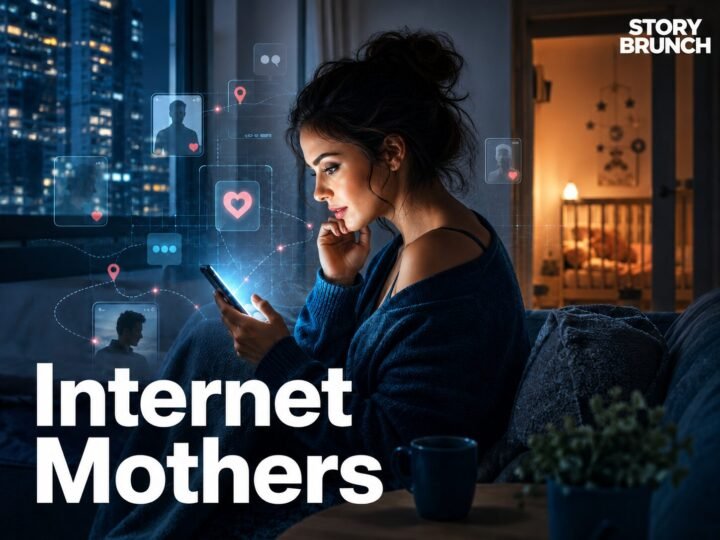
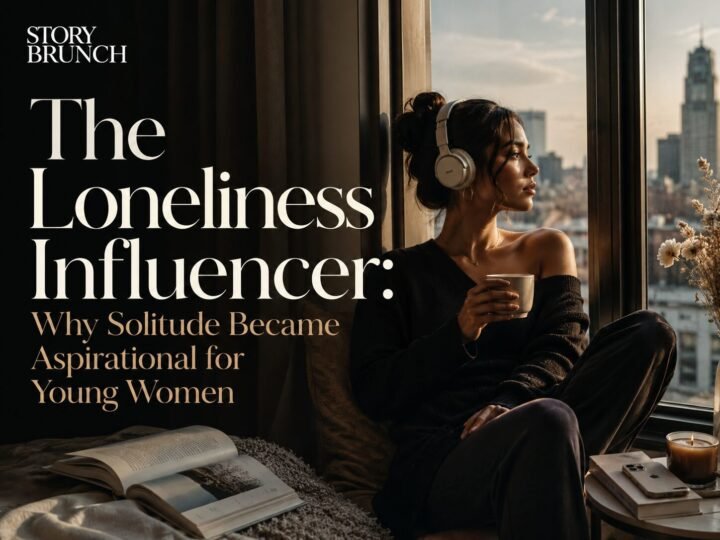
She wakes in a studio apartment the colour of sand. She makes coffee — one cup. She writes in a journal — one pen. She walks to a museum and stands before a painting for a long time, looking. At lunch she sits at a bar, orders pasta, doesn’t look at her phone. This is the kind of scene that now fills the feeds of millions of young women: a woman alone, performing her solitude as luxury. In the background, the voiceover is gentle, almost a whisper — she used to fear being alone, she says. Now she craves it. The caption reads “ROMANTICISING MY SOLITUDE,” and the comments below are a chorus of the same sentence: This is all I want.
You have seen this content, or something very like it. By 2026 the “solo date” genre — young women filming themselves doing traditionally social activities alone and framing the experience as luxurious, even radical — has become one of the defining content categories of the mid-decade. The hashtag #solodate has accumulated tens of billions of views across platforms. #LivingAloneDiaries, #RotDay (a day spent deliberately doing nothing, alone), and #RomanticizeYourLife have spawned entire content ecosystems. What began as a trickle of earnest, lo-fi vlogs has matured into an aesthetic machine: polished, widely imitated, and — as this analysis will explore — carrying unspoken assumptions that deserve the same scrutiny we would bring to any other ideal being broadcast to millions of young women.
This is not an argument against solitude. Solitude — real, unchoreographed, off-camera solitude — is essential. Every artist, thinker, and human being who has ever needed to hear their own thoughts knows this. This is an analysis of what happens when solitude becomes a performance, and why the performance, not the solitude itself, has become aspirational. The distinction matters.
What is a loneliness influencer?
A loneliness influencer (or solitude influencer) is a content creator — typically a young woman — who documents and aestheticises time spent alone. The genre encompasses solo travel vlogs, apartment tours for one, solo date diaries, “rot days” (deliberate rest days without social obligation), and the broader “romanticise your life” movement. Most creators frame their content around empowerment, self-love, and independence. The analytical term “loneliness influencer” is not one they use for themselves; it is a lens for examining what the genre communicates and to whom.
I · The Camera as Mirror
The gaze turned inward
To understand why this genre feels so potent, you have to start with the direction of the gaze. For centuries, the story of women and looking has been a story of being looked at — by men, by society, by a visual culture that positioned women as objects of scrutiny. The front-facing camera, the solo vlog, the apartment tour for an audience of strangers: these are, in one sense, a reversal. The woman behind the lens is also the woman in front of it. She controls the frame. She decides what is seen. She curates the version of her solitude that the world will consume, and that power — the power to be the author of your own image — is genuinely meaningful.
But there is a paradox here, and it is the paradox at the heart of the loneliness influencer genre. When solitude is performed for an audience, it stops being solitude. It becomes something else: a public enactment of private experience, a stage on which the actor is also the director and the lighting designer and the marketing team. The camera that was supposed to liberate the subject from the male gaze becomes a new kind of observer — the audience, the algorithm, the metrics. You are not alone when you are filming yourself being alone. You are at work.
This is not to dismiss the value of the content. Many young women report that watching solo date videos helped them overcome a genuine fear of eating alone in public or travelling by themselves. The representation of a woman contentedly occupying space without a partner is not nothing. But representation is not the same as liberation, and the difference between the two is where the analysis needs to live.
II · The Loneliness Paradox
Watching alone, together
The audience for solitude content is, statistically, not composed of women who have chosen to be alone. It is composed of women who are alone, full stop — and a growing body of research suggests they are lonelier than any young female cohort in decades. A 2024 meta-analysis in Psychological Bulletin found that loneliness among young adults, particularly women under 30, rose significantly over the preceding ten years, with social media consumption itself emerging as a robust predictor. The mechanism is not mysterious: platforms that promise connection deliver something closer to an endless audition, where every post is a performance evaluated by metrics and every interaction carries the risk of judgment. The result is hyperconnection and deep isolation, occupying the same body at the same time.
Into this condition, a solitude influencer’s clip arrives not as a mirror but as a balm. Watching a beautiful woman move serenely through her empty apartment, the viewer experiences something that researchers call parasocial comfort — the feeling of companionship from a one-way relationship with a media figure. It feels, for a few minutes, like being less alone. The creator’s calm voice, her deliberate movements, the golden light falling on her single breakfast plate: these are sensory signals of safety and control, and they soothe the viewer’s nervous system in ways that are physiologically real.
But the comfort is also the trap. A 2025 study in the Journal of Social and Personal Relationships examined the relationship between idealized solitude content and viewer wellbeing and found a troubling pattern: for women who were already lonely, consuming this content was associated with increased feelings of isolation, not decreased. The mechanism appeared to be social comparison. The viewer’s own unchosen aloneness — the empty apartment she didn’t choose, the solo dinner she didn’t film — measured against the creator’s glamorised, chosen solitude, felt less like inspiration and more like failure. The content that promised to make solitude feel aspirational was, for its most vulnerable consumers, making solitude feel worse.
The algorithm, of course, notices none of this. It notices watch time, rewatch rate, comment volume. Solitude content that is beautiful, serene, and unchallenging gets amplified. Content about the messier, slower work of building real community — which is unphotogenic, awkward, and profoundly resistant to being turned into a three-minute video — does not. The feed teaches young women to aspire to an ever more polished version of being alone, while quietly deprioritising the content that might help them be less alone in reality.
The algorithm optimises for the most beautiful version of solitude. Whether it’s good for you is not in the objective function.
III · The Aesthetic of Self-Sufficiency
The room that needs no one
If you close your eyes and picture a solitude influencer’s apartment, you will see a remarkably consistent set of objects: a single bed made with linen sheets, one mug on a shelf, a journal on a desk, a candle burning, a window with soft light, a plant that is thriving but not demanding. The palette is always neutrals — beige, cream, oatmeal, slate — and the space is never cluttered, because clutter implies a life that has overflowed the container. The subject moves slowly, because slowness signals that no one is waiting for her. She is, the aesthetic argues, a complete system. Her world is sufficient. She does not need you.
This visual language communicates a specific set of propositions without ever stating them aloud: that self-sufficiency is the highest form of emotional health, that needing others is a sign of incompleteness, that the ideal woman is a woman who has no unmet longings. These are not facts. They are arguments, and the aesthetic is the argument. Psychologists have names for the mechanisms at work — the halo effect (beauty in the apartment transfers credibility to the lifestyle), processing fluency (content that is easy to absorb feels more true), the mere-exposure effect (the fortieth solo-date video requires no argument at all). Together they form a persuasion environment that operates below the threshold of conscious resistance, and it is, by design, very difficult to argue with a sunbeam.
The appeal is not manufactured from nothing. The solitude aesthetic is answering a genuine exhaustion with the opposite extreme: the relentless productivity culture that tells young women they must optimise every hour, the social media performance that demands constant availability, the dating landscape that can feel like an endless interview. The “rot day” — a day of deliberate, unapologetic nothingness — is genuinely subversive in a world that measures worth in output. The problem is not the desire for rest. The problem is when the prescription for rest becomes a prescription for permanent withdrawal, and when withdrawal is packaged not as one valid human mode among many, but as the enlightened one.
IV · Feminist Roots & Routes
A room of one’s own, revisited
No serious discussion of women and solitude can bypass Virginia Woolf. In 1929, in A Room of One’s Own, Woolf argued that a woman needed money and a room with a lock on the door in order to write fiction. The claim was radical in its time: it asserted that women’s creative and intellectual lives required material conditions — privacy, economic independence, freedom from domestic interruption — that society had never granted them. Solitude, in Woolf’s formulation, was not a lifestyle choice. It was a structural necessity for a mind to be free.
Ninety-seven years later, the loneliness influencer’s apartment is also a room of her own. But there is a difference. Woolf’s room had a lock. The influencer’s room has a ring light, a following of millions, and a monetisation strategy. One is a space of genuine withdrawal — of closing the door and being unobserved. The other is a stage. And when solitude becomes a stage, it ceases to be solitude. It becomes a performance of solitude, and the difference between the two is the difference between rest and work, between freedom and a new form of obligation.
The feminist history of solitude matters here because it reminds us that claiming alone time has always been, for women, a political act. The spinster, the nun, the woman artist who refused marriage — these figures were pathologised precisely because they refused to make their lives available to others. The loneliness influencer draws on this legacy, consciously or not, when she frames her solitude as empowerment. But the frame is doing two things at once. It is asserting a woman’s right to exist for herself — genuinely radical. And it is, in the same gesture, converting that right into content, which is not the same thing at all.
V · What Gets Edited Out
The unspoken conditions of the solo life
The solitude influencer’s apartment is not, as a rule, located in a housing-insecure neighbourhood. Her solo travel is funded by brand partnerships, family wealth, or a level of economic security that does not need to be stated because it is visible in every frame. Her solitude is a choice — and that is precisely what makes it photograph well. The viewer whose solitude is not a choice, who is alone because she cannot afford to live with roommates she trusts, because her city has no public spaces where a woman can sit unbothered, because her social circle dissolved during the pandemic and never re-formed — that viewer’s solitude does not look like the content. It does not have good lighting. It does not feel like empowerment. It feels like what it is: isolation, which is not the same thing.
This is the structural critique that the genre’s soft focus is designed to blur. Rising housing costs have made solo living a luxury in most major cities. Delayed marriage and economic precarity mean that many young women are alone not because they have chosen a radical independence but because the material conditions for partnership or community have not materialised. The solitude influencer’s content, by cropping out these conditions, implicitly reframes a structural problem as a lifestyle victory. You are not alone because the economy has failed you. You are alone because you are enlightened. The reframing feels good. That does not make it true.
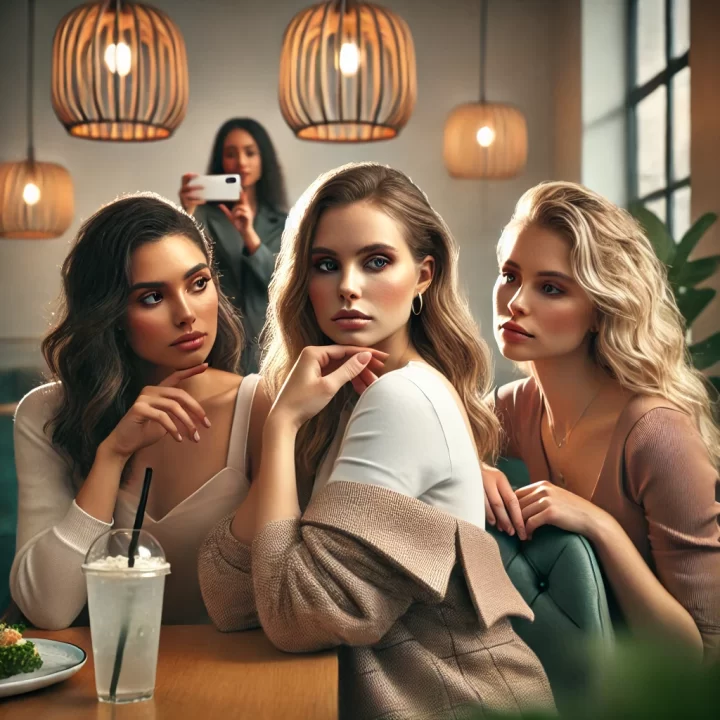
The racial and class dimensions are similarly invisible. The woman filming her solo date in a restaurant where no one bothers her is, almost always, white, conventionally attractive, and dressed in a way that signals economic comfort. A Black woman eating alone, a fat woman eating alone, a woman in a hijab eating alone — these women are not afforded the same invisibility, the same presumption of serene autonomy. Their solitude is policed, commented on, read as loneliness or failure rather than as liberation. The “aspirational solitude” archetype is not universal. It is specific, and its specificity is part of what makes the aspiration work. Not everyone is invited to be the woman in the frame.
The solitude that looks like freedom on camera depends on conditions that the camera never shows.
VI · Beyond the Ring Light
What we actually long for when we long for solitude
If you read the comments under a popular solo date video — and you should, because the comments are the real text — a pattern emerges that the content itself does not contain. The women writing “I want this” are not, for the most part, saying they want to be alone. They are saying they want to feel safe while alone. They want to feel enough. They want to stop performing for an audience that never stops watching and never seems satisfied. The solitude they are longing for is not the absence of people. It is the absence of judgment, of expectation, of the exhausting labour of being perpetually evaluated. It is, in other words, a longing for rest.
And rest is a real need. The problem is not the diagnosis — the diagnosis is accurate. The problem is that the prescription, as delivered by the content economy, is incomplete. You cannot rest your way out of a loneliness epidemic. You cannot self-care your way into community. The solitude influencer’s content can soothe you for three minutes, but it cannot build the mutual-aid network, the neighbourhood dinner club, the chosen family, the late-night phone call with a friend who actually knows you — the unphotogenic, un-monetisable infrastructure of human connection that is the only real answer to loneliness.
The most radical thing a young woman could do in 2026 might not be to film herself thriving alone. It might be to put the camera down and invite someone over. Not to post about it. Just to do it. That is not an aesthetic. It is not content. It is simply life, and it is the thing the ring light, for all its warmth, cannot provide.
Reflection
Your solitude, your screen
Tap each card to turn it over. No scores — just questions to sit with.
When was the last time you were truly alone — without a screen?
Was that solitude or isolation? Did you choose it, or did it choose you?
Who do you call when you are lonely — and who calls you?
Does the list feel balanced? If not, what would it take to change that?
If you stopped performing your solitude online, what would remain?
Would your relationship with being alone change if no one was watching?
Insights
What this tells us about the moment we’re in
1. The diagnosis is real.
Young women face burnout from constant social performance. Solitude content resonates because it names a genuine exhaustion.
2. The prescription is incomplete.
Aestheticised solitude can soothe temporarily, but it individualises structural problems — loneliness, precarity, the housing market — and frames them as lifestyle choices.
3. The performance changes the thing.
Solitude performed for an audience is no longer solitude. It becomes a product, and the labour of making it beautiful is invisible.
4. The archetype is narrow.
The aspirational “woman alone” is almost always white, thin, and economically secure. The solitude of women who do not fit that image is rarely celebrated.
5. Community is the counter-programming.
The hardest, most radical, least photogenic work — building real, reciprocal relationships — is what the algorithm doesn’t serve. It’s also what we most need.
6. We long for rest, not withdrawal.
The comments say it plainly: women want to stop performing. The answer may not be more beautiful solitude content, but less content altogether.
Frequently Asked
Questions this piece gets asked
What is a “loneliness influencer”?
A loneliness influencer (or solitude influencer) is a content creator — typically a young woman — who documents and aestheticises time spent alone. The genre includes solo travel vlogs, apartment tours, solo date diaries, “rot days,” and the broader “romanticise your life” trend. The analytical term “loneliness influencer” is not one most creators use for themselves; it is a lens for examining what the genre communicates.
Is the solitude trend feminist or anti-feminist?
Both readings have merit. The pro-feminist reading: the genre normalises women existing happily without partners, challenging patriarchal scripts. The critical reading: it individualises structural problems (loneliness, economic precarity) into lifestyle choices and often centres a narrow, privileged archetype. A nuanced view holds both: individual creators can exercise genuine agency while the aggregate genre functions as a commercial and ideological system worth examining.
Does watching solitude content make loneliness worse?
Research suggests it can, especially for viewers whose aloneness is involuntary. A 2025 study found that consuming idealised solitude content was associated with increased loneliness in already-isolated viewers, likely due to social comparison. The parasocial comfort is real but temporary, and it does not replace reciprocal human connection.
Where did the solitude influencer trend come from?
The genre crystallised during and after the COVID-19 pandemic, when lockdowns forced isolation and content creation became a primary outlet. It draws on older traditions — self-care discourse, solo travel blogging, and the feminist reclamation of female solitude from figures like Virginia Woolf. What’s new is its scale, algorithmic amplification, and integration into a commercial ecosystem.
Do solitude influencers make money?
Many do, through brand partnerships, affiliate links, sponsored content, and product lines. The lifestyle depicted as withdrawal from economic obligation is, at the influencer tier, a business model within it. The economics are invisible in the frame but central to the genre’s sustainability.
Sources & Further Reading
- Buecker, S., & Horstmann, K. T. (2024). “Loneliness and social media use among young adults: A meta-analytic review.” Psychological Bulletin.
- Thomas, V., & Azmitia, M. (2025). “Idealised solitude content and loneliness in young women: Social comparison as a mediator.” Journal of Social and Personal Relationships.
- Woolf, V. (1929). A Room of One’s Own. Hogarth Press.
- Turkle, S. (2011). Alone Together: Why We Expect More from Technology and Less from Each Other. Basic Books.
- Holt-Lunstad, J., Smith, T. B., & Layton, J. B. (2010). “Social Relationships and Mortality Risk: A Meta-analytic Review.” PLOS Medicine.
- Spacks, P. M. (1981). The Female Imagination — on solitude and the woman writer.
- Airbnb Newsroom (2025). “Solo travel by women: the fastest-growing segment in global tourism.”
Continue Reading
Related on Story Brunch