
Who Gets to Choose Iran’s Next Leader? The Strange New World of Outsourced Sovereignty
Trump wants to pick Iran's next leader. But can a nation outsource sovereignty? History says no—and the consequences could reshape the world order.

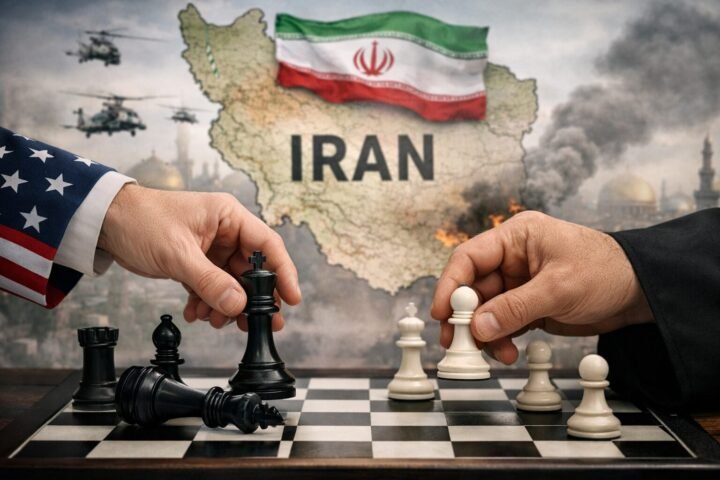
On the morning of March 5, 2026, Donald Trump picked up the phone and told Axios something that would have seemed like satire just five years ago: that he needed to be personally involved in choosing Iran’s next supreme leader. Not through diplomacy. Not through the United Nations. Not through any internationally recognized process. Just — personally involved. Like a CEO approving a hire. Like a landlord approving a tenant. Like a Roman emperor nodding at a provincial appointment.
This was not a slip of the tongue. It was the second time in a week that Trump had made such a statement. He compared the situation to Venezuela, where U.S. forces had captured President Nicolas Maduro earlier in the year and, in Trump’s telling, helped engineer the smooth transition to a friendlier government. ‘They are wasting their time,’ Trump told Axios about Iran’s Assembly of Experts, the clerical body constitutionally mandated to select the supreme leader. ‘I have to be involved in the appointment.’
Iran’s response was swift and unambiguous. Foreign Minister Abbas Araghchi said that ‘we will allow nobody to interfere in our domestic affairs.’ On March 8, the Assembly of Experts — meeting under extraordinary wartime conditions, with bombs falling nearby — selected Mojtaba Khamenei, the son of the assassinated Supreme Leader Ali Khamenei, as Iran’s new supreme leader. It was, in the words of one analyst, ‘a real finger in the eye to Donald Trump.’
And yet the question Trump raised — embarrassing, blunt, stripped of diplomatic varnish — is one of the most important questions of our era: in the twenty-first century, can one nation legitimately install another’s government? Who gets to decide who leads a country? And what happens when the most powerful nation on earth decides the answer is: we do?
“He’s going to have to get approval from us. If he doesn’t get approval from us, he’s not going to last long.” — President Donald Trump, ABC News, March 8, 2026
A Confession Dressed as Foreign Policy
There is something almost clarifying about Trump’s candor. American presidents have always meddled in foreign governments — covertly funding opposition movements, arming rebel factions, imposing crippling sanctions to force leadership changes, quietly backing coups. The CIA’s fingerprints are on regime changes from Iran in 1953 to Guatemala in 1954 to Chile in 1973. What Trump did was simply say the quiet part out loud.
The 1953 Iranian coup is, in fact, the original wound in this story — and Iranians have not forgotten it. Mohammad Mosaddegh, the democratically elected prime minister of Iran, was overthrown in a covert operation jointly arranged by the United States and Britain after he nationalized the Anglo-Iranian Oil Company. The Shah was installed. And twenty-six years later, when Iranians rose up against the Shah in 1979, they were in part rising up against the America-backed autocracy that had replaced their democracy. The Islamic Republic, for all its repression and dysfunction, was born partly as a reaction to what the world now calls ‘outsourced sovereignty.’
So when Trump says he wants to pick Iran’s next leader, he is not doing something entirely new. He is just skipping the euphemisms. And that lack of euphemism is itself a kind of rupture — not just in diplomatic norms, but in the carefully maintained fiction that the post-war international order is built on the sovereignty of nations.
The Venezuela Blueprint — and Why It Probably Won’t Work on Iran
Trump keeps returning to Venezuela as his model. ‘Venezuela was so incredible because we did the attack, and we kept government totally intact,’ he told reporters. The U.S. captured Maduro, installed Delcy Rodriguez as a cooperative successor, and — in Trump’s telling — received 80 million barrels of oil for the trouble. Clean. Efficient. A government-as-franchise model.
But analysts who know Iran are nearly unanimous: Iran is not Venezuela. The differences are structural, cultural, theological, and geopolitical.
Venezuela’s government is essentially a secular, personalist autocracy. Remove the person, and the system can be redirected. Iran’s Islamic Republic, by contrast, is a theocratic system where the supreme leader must be a qualified Islamic jurist — a marja — with deep religious credentials and the endorsement of the clerical establishment. There is no Iranian Delcy Rodriguez waiting in the wings, acceptable to both Washington and Tehran’s religious power structure. The two things are, almost by definition, mutually exclusive.
Trita Parsi, executive vice president of the Quincy Institute, put it plainly: Trump ‘does not appear to find that person from within the existing Iranian system.’ The supreme leader must emerge from a specific theological tradition, must command religious legitimacy among Iran’s clerics, and must be endorsed by the Revolutionary Guards — none of which can be outsourced to Washington.
There is also the matter of scale. The Iranian state, even under bombardment, is vastly more complex than Venezuela. Its military has been fighting proxy wars for decades. Its bureaucracy stretches across a country of 90 million people. Its religious establishment has roots going back centuries. The notion that a phone call from Mar-a-Lago can reshape this is, to put it gently, optimistic.
The supreme leader must be a qualified Islamic jurist — a marja — with deep religious credentials. There is no Iranian Delcy Rodriguez acceptable to both Washington and Tehran’s clerical establishment.
History’s Report Card on Outsourced Sovereignty
History has been running this experiment for decades. The results are not encouraging.
In Afghanistan, a U.S.-led coalition toppled the Taliban in 2001, invested over two trillion dollars over twenty years, and built an entire state from the ground up — with a constitution, an elected government, and a trained military. In August 2021, after the U.S. withdrawal, that state collapsed in a matter of days. The Taliban returned to Kabul as if the two decades had been a brief inconvenience.
In Iraq, President George W. Bush stood before a banner reading ‘Mission Accomplished’ in May 2003. The mission was not accomplished. The disbanding of the Iraqi army — a decision made in Washington — created hundreds of thousands of unemployed, armed, humiliated Sunni men with no stake in the new order. The result was an insurgency, then a civil war, then the emergence of ISIS, which carved out a caliphate across two countries. Iraq today has a government, but it is deeply fragile and heavily influenced — of all the ironic outcomes — by Iran.
Libya offers perhaps the starkest lesson of all. NATO intervened in 2011 to protect civilians from Muammar Gaddafi, and what began as a protection mission became a regime-change operation. Gaddafi was killed. But as the Obama administration later acknowledged, there was no plan for what came next. Libya descended into a failed state, fractured among hundreds of militias, and remains effectively ungoverned to this day.
The pattern is consistent enough that scholars have given it a name. As political scientist Alexander Downes has documented, foreign-imposed regime change is more likely to fail than succeed. Removed leaders sometimes escape and organize resistance. Militaries disintegrate, creating instant insurgencies. And the deeper problem is one of legitimacy: a government installed by a foreign power, no matter how well-intentioned, carries the original sin of that installation. It can never fully claim to represent its own people, because everyone knows where it came from.
Cato Institute researchers reached a sobering conclusion: ‘The most common outcome of a foreign regime-change operation is democracy reduction in the territory.‘ Interveners prefer ‘pliant leaders’ over genuinely democratic ones — because democratic leaders answer to their own people, not to Washington.
The Legitimacy Problem No One Wants to Talk About
There is a concept in international law called the Westphalian principle of sovereignty, born from the 1648 Peace of Westphalia that ended Europe’s Thirty Years’ War. Its core idea is simple: states have the right to determine their own political systems without external interference. It is the bedrock of the modern international order, enshrined in the UN Charter, invoked constantly in diplomatic disputes.
It is also, in practice, frequently violated by powerful states when convenient. But there is a crucial difference between covert interference and what Trump is doing now: openly claiming veto power over another nation’s leadership selection. The former operates in the shadows, allowing the fiction of sovereignty to be maintained. The latter destroys the fiction entirely.
When Trump says Iran’s new leader ‘is going to have to get approval from us,’ he is not just making a foreign policy statement. He is articulating a new doctrine: that the United States has the right to approve or disapprove of other nations’ governments. Not based on treaty obligations. Not based on UN Security Council resolutions. Just — because America is America.
The implications of this doctrine, if normalized, are profound. If Washington can veto Tehran’s supreme leader, why can’t Beijing veto Washington’s Secretary of State? Why can’t Moscow claim approval rights over Eastern European governments? The logic, once unleashed, has no natural boundary. It is the logic of empire — that powerful nations get to organize the political world around their preferences.
This is not a hypothetical concern. China and Russia are watching the Iran intervention very closely. Every precedent set in Tehran becomes an argument available to Beijing regarding Taiwan, or to Moscow regarding Ukraine.
If Washington can veto Tehran’s supreme leader, why can’t Beijing veto Washington’s Secretary of State? The logic of empire, once unleashed, has no natural boundary.
The Finger in the Eye — and What Happens Next
On March 8, 2026, Iran’s Assembly of Experts announced that Mojtaba Khamenei — the 56-year-old son of the assassinated supreme leader, the man Trump called ‘a lightweight’ and ‘unacceptable’ — had been selected as the Islamic Republic’s new supreme leader.
It was the most explicit possible rejection of Washington’s claimed authority. The assembly had met under bombardment, conducted a rushed online vote under what members described as an ‘unnatural’ atmosphere, with IRGC commanders pressuring members to vote for Mojtaba. U.S. and Israeli bombs had hit the assembly’s office in Qom after the votes were cast, before the count could be completed. And yet the result held.
Trump responded by saying Mojtaba ‘is not going to last long’ without U.S. approval. Israeli Defense Minister Israel Katz stated that Khamenei’s successor — whoever they were — would be a legitimate target for assassination regardless of identity.
This is the end point of outsourced sovereignty taken to its logical extreme: not just picking a leader, but promising to kill whoever is picked if they don’t comply. It is not diplomacy. It is not foreign policy in any recognizable sense. It is the language of a protection racket.
And here is the brutal irony: this approach is not just morally problematic. It is strategically counterproductive. History’s record is clear — governments installed or approved by foreign powers lack the one thing that makes governments durable: legitimacy in the eyes of their own people. Even if Washington finds its ‘Iranian Delcy Rodriguez,’ any leader seen as America’s choice will be fighting for legitimacy from day one. The resistance will have a ready-made rallying cry: sovereignty. The same word that has brought down every foreign-installed government before.
What the World Is Watching
The Global South is watching. For decades, nations across Africa, Asia, and Latin America have chafed at what they see as Western powers’ selective application of sovereignty principles — loudly defending Ukrainian sovereignty while quietly acquiescing in interventions in Iraq, Libya, and Syria. Trump’s statements about Iran have crystallized that tension in the starkest possible terms.
Iran’s Arab neighbors are watching nervously. Saudi Arabia, the UAE, and Qatar — all of whom host U.S. military bases, some of which have already come under Iranian missile fire — are caught between relief at Iran’s weakened state and anxiety about what comes next. A destabilized Iran is not in anyone’s regional interest. As UAE air defenses intercepted hundreds of Iranian missiles and drones in recent weeks, the question of what post-war Iran looks like has become urgently practical.
Iran’s own people are watching, in perhaps the most complicated way of all. Many Iranians despise the Islamic Republic. Surveys conducted during the conflict found that 63 percent of Iranians believed the war was between Israel and the Islamic Republic — not between Israel and the Iranian people. Many want change. But wanting change from within, and welcoming a foreign power to impose it, are very different things. Iranian national identity runs deep, and the memory of 1953 — the last time America helped choose Iran’s government — has never faded.
Even among Iranians who danced in the streets when Khamenei was killed, there is a persistent suspicion: is the war about freeing Iran, or absorbing it? Are bombs falling to liberate, or to subjugate? These are not paranoid questions. They are questions that history has taught Iranians to ask.
The Question That Will Define the Century
We are living through a hinge moment in international relations. The post-1945 order — imperfect, often hypocritical, but built around at least nominal commitments to sovereignty and multilateralism — is under severe strain. The question being tested in Tehran right now is whether that order will be replaced by something better, or simply by naked power.
Can one nation legitimately install another’s government? The honest answer — drawn from history, international law, political science, and simple moral reasoning — is no. Not because it’s always been impossible to do so militarily. Clearly it hasn’t. But because legitimacy cannot be imported. It cannot be delivered by missile strike. It cannot be granted by a phone call from Air Force One. It can only be grown from within.
Every government that has lasted, every state that has achieved stability, every leader who has commanded genuine loyalty — they did so because their own people, however imperfectly, chose them or came to accept them. This is not ideology. It is political physics.
Trump wants an Iranian Delcy Rodriguez. He wants a cooperative, pliant, ‘harmony and peace’ leader who will take Washington’s calls and do Washington’s bidding. What he is likely to get, if history is any guide, is something far messier: a leader who needs to perform anti-American nationalism to survive domestically, a country simmering with resentment, and eventually — perhaps in five years, perhaps in twenty — a crisis that makes the current one look manageable.
The Assembly of Experts, meeting under bombs, chose Mojtaba Khamenei. He may be a poor choice. He almost certainly carries all the pathologies of the system that made him. But he was chosen by Iranians — or at least by the Iranian system, which for now is what exists — not by Washington. And that, in the strange new world of outsourced sovereignty, is an act of defiance that will echo far beyond Tehran.
Legitimacy cannot be imported. It cannot be delivered by missile strike. It can only be grown from within. This is not ideology. It is political physics.
About StoryBrunch
StoryBrunch publishes independent, in-depth journalism on stories that mainstream media overlooks. This article reflects independent editorial analysis and does not represent the position of any government or institution.